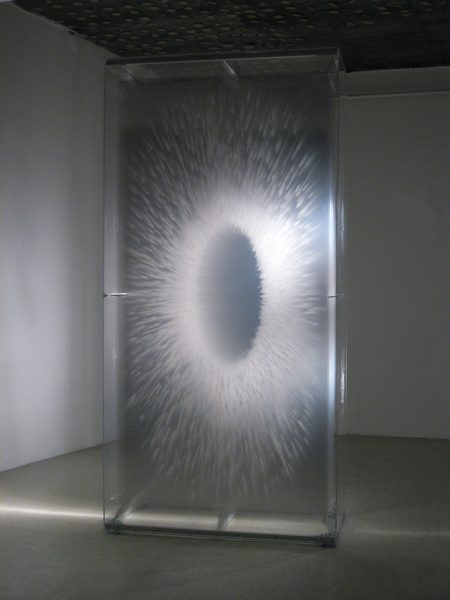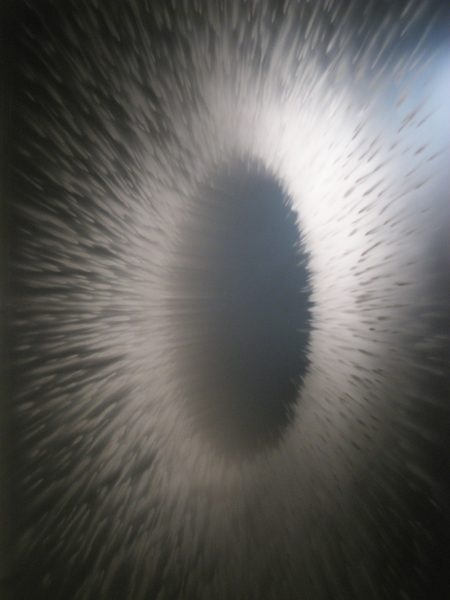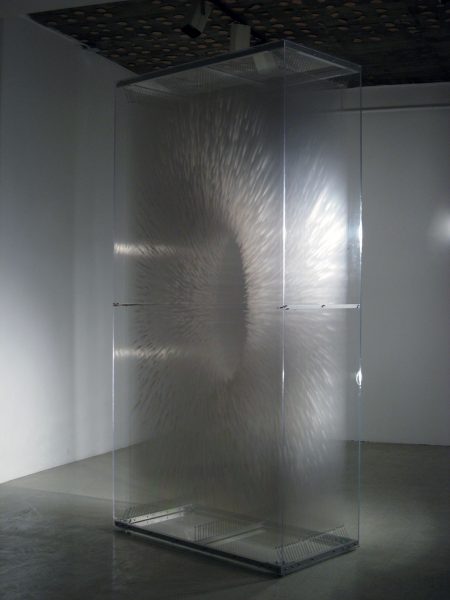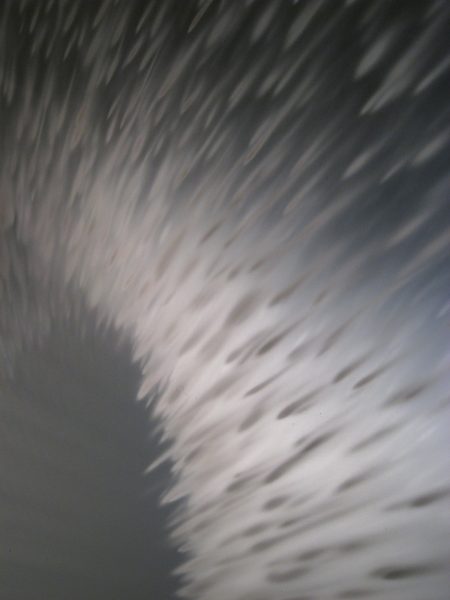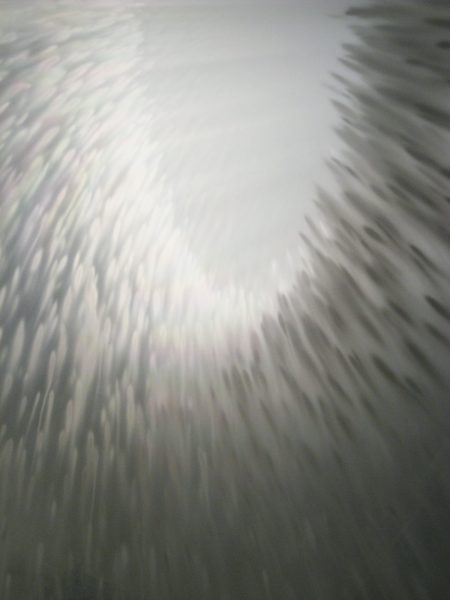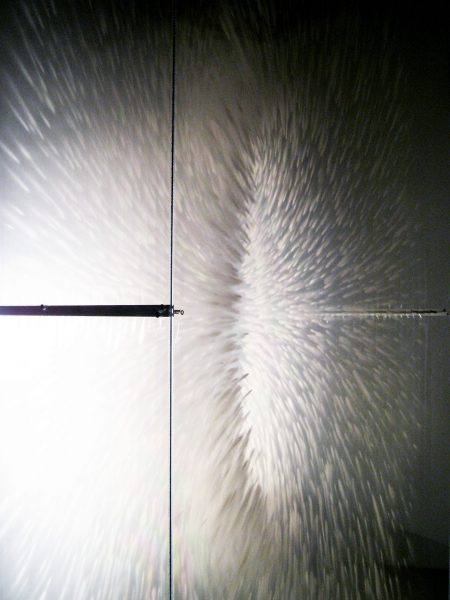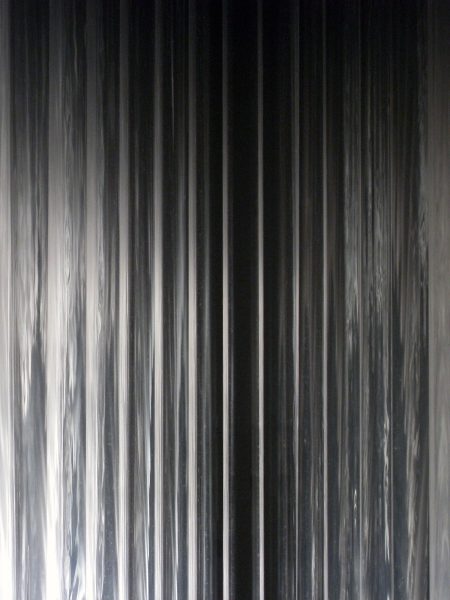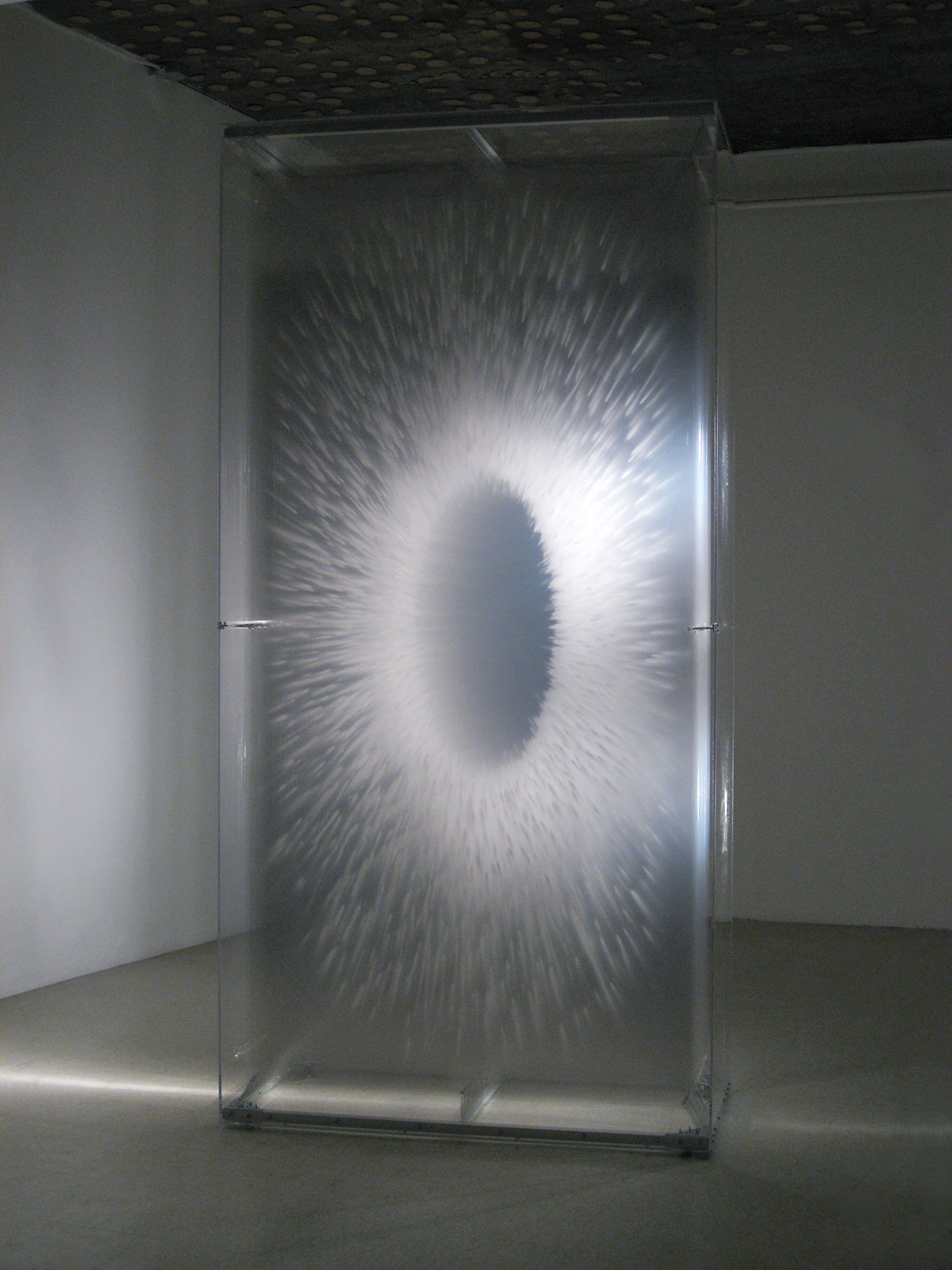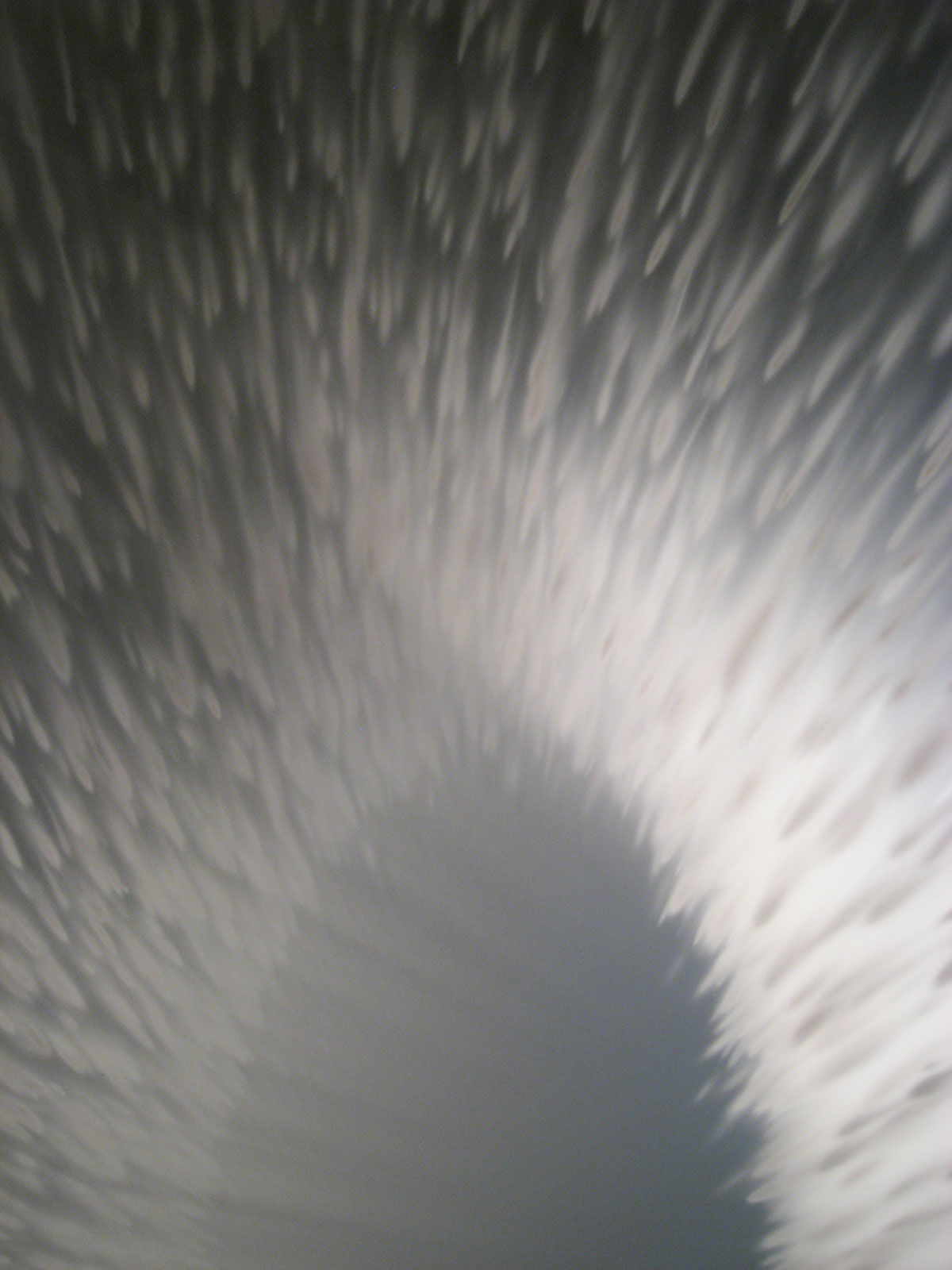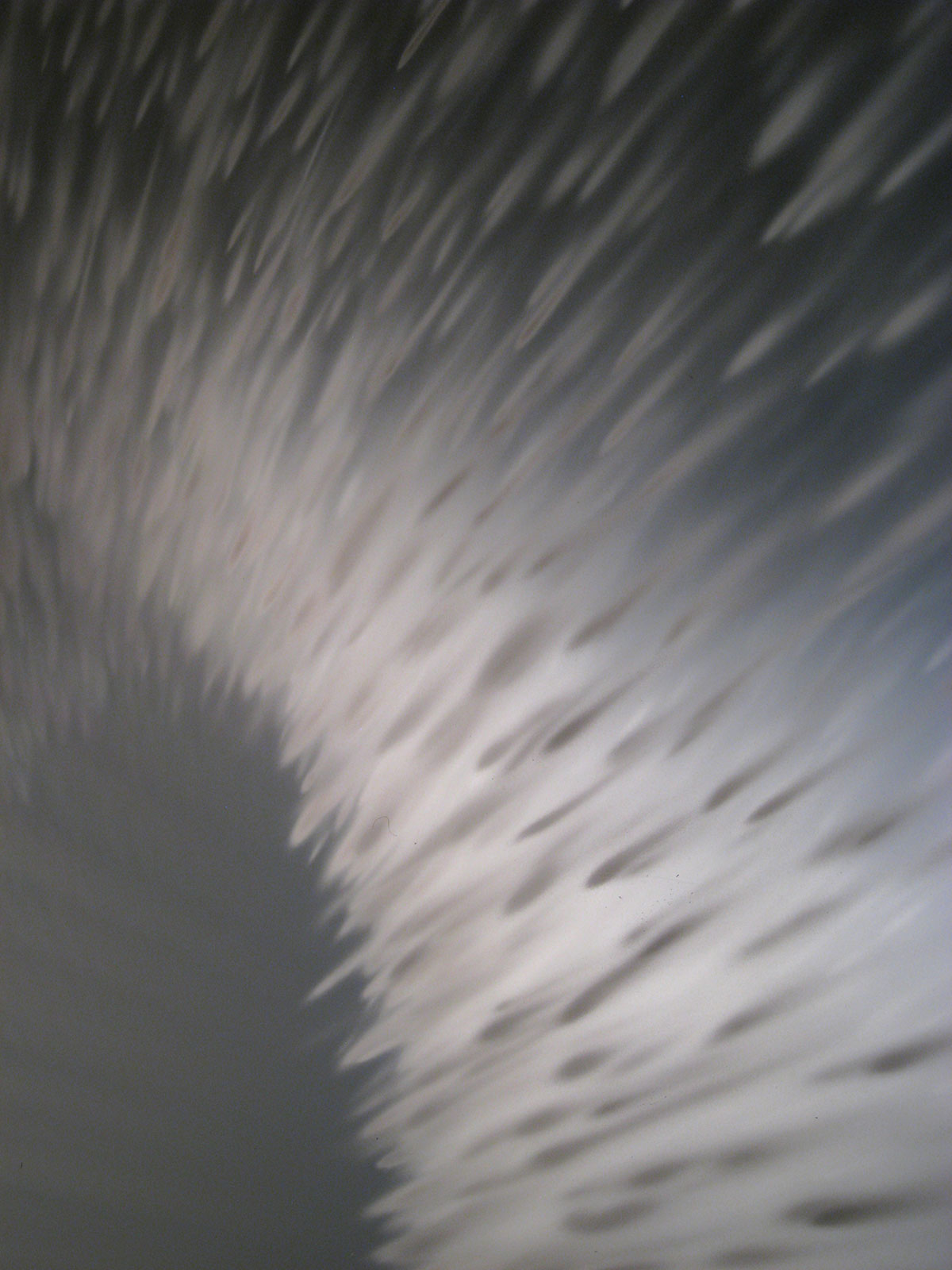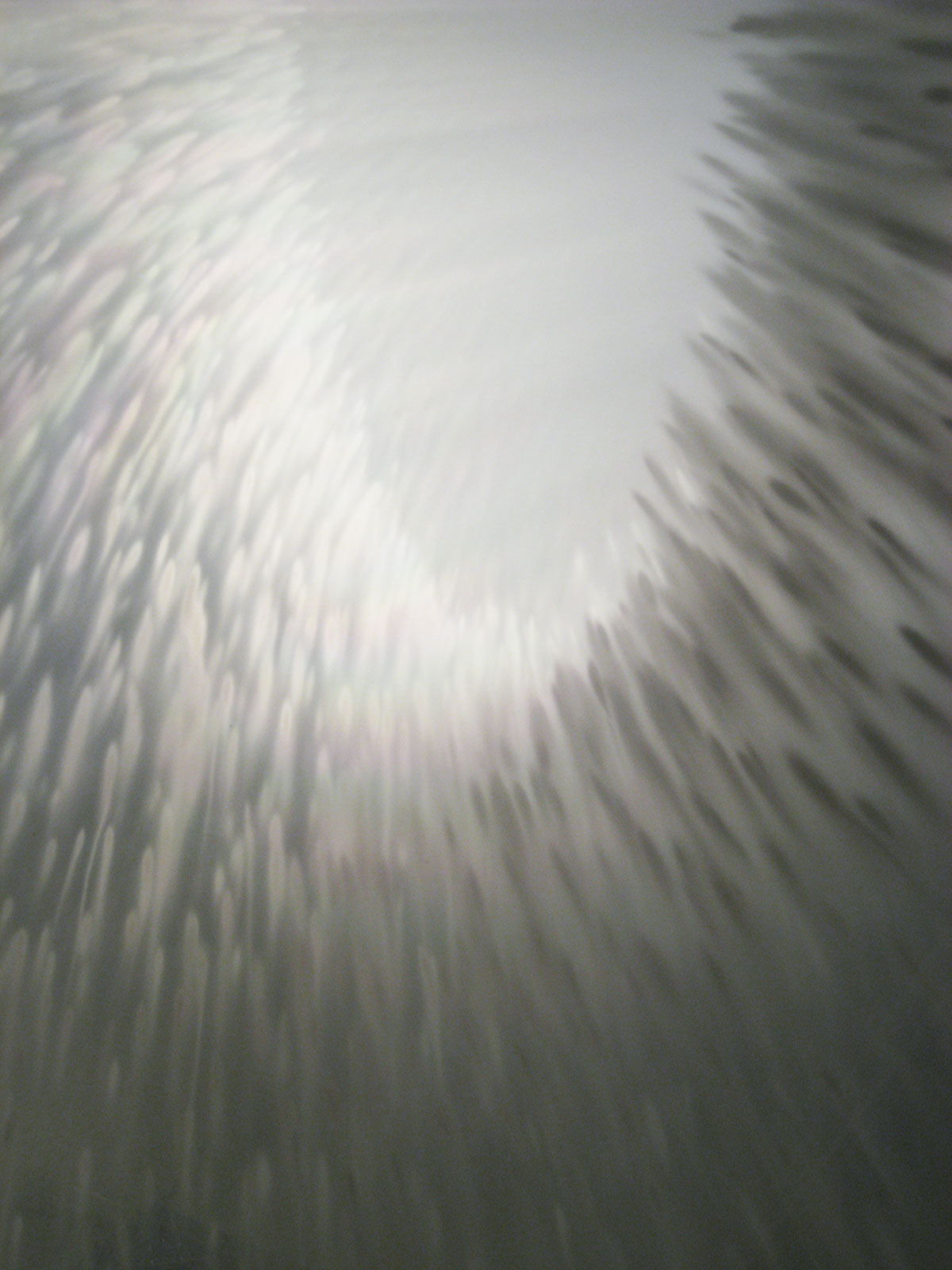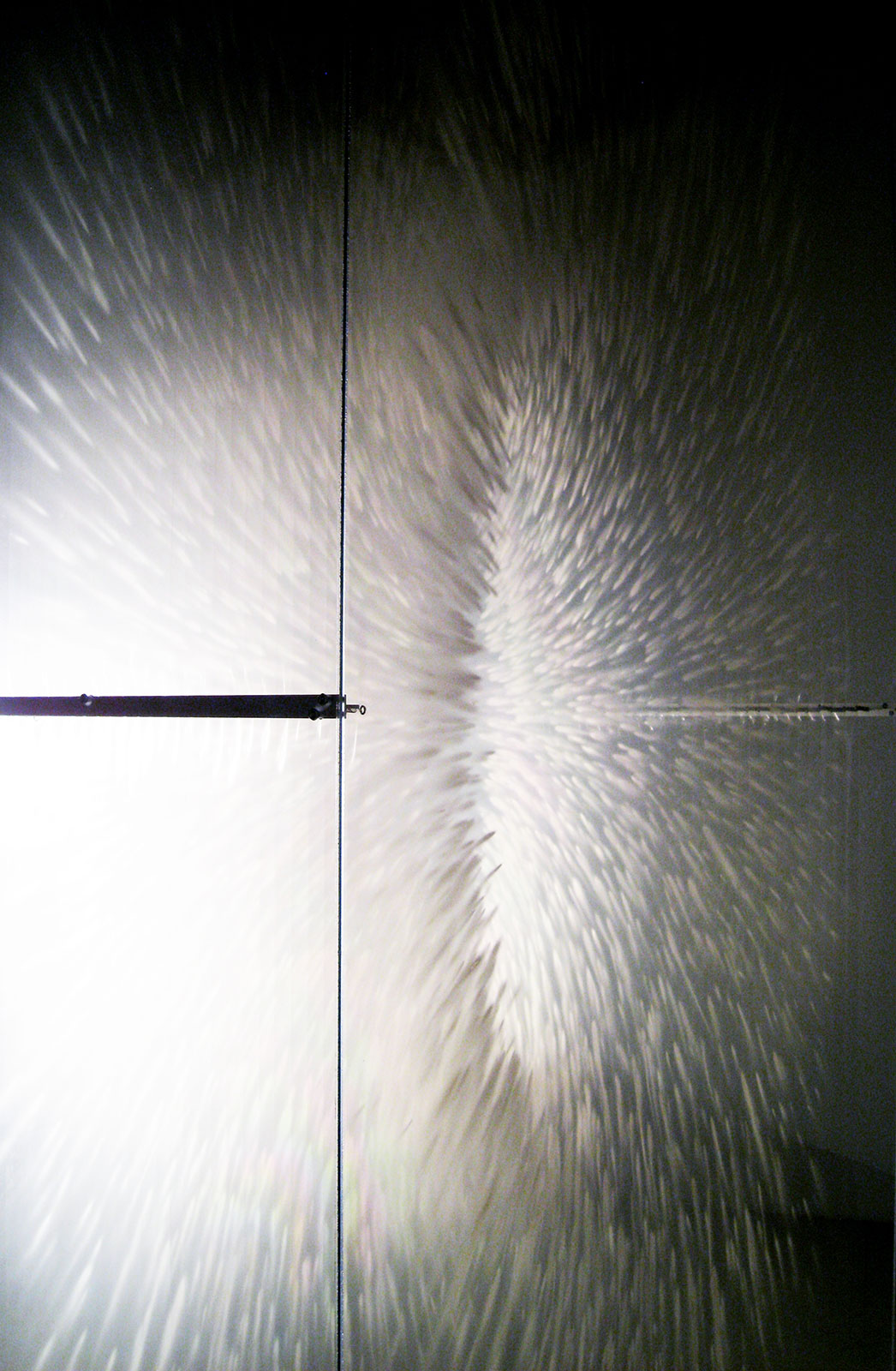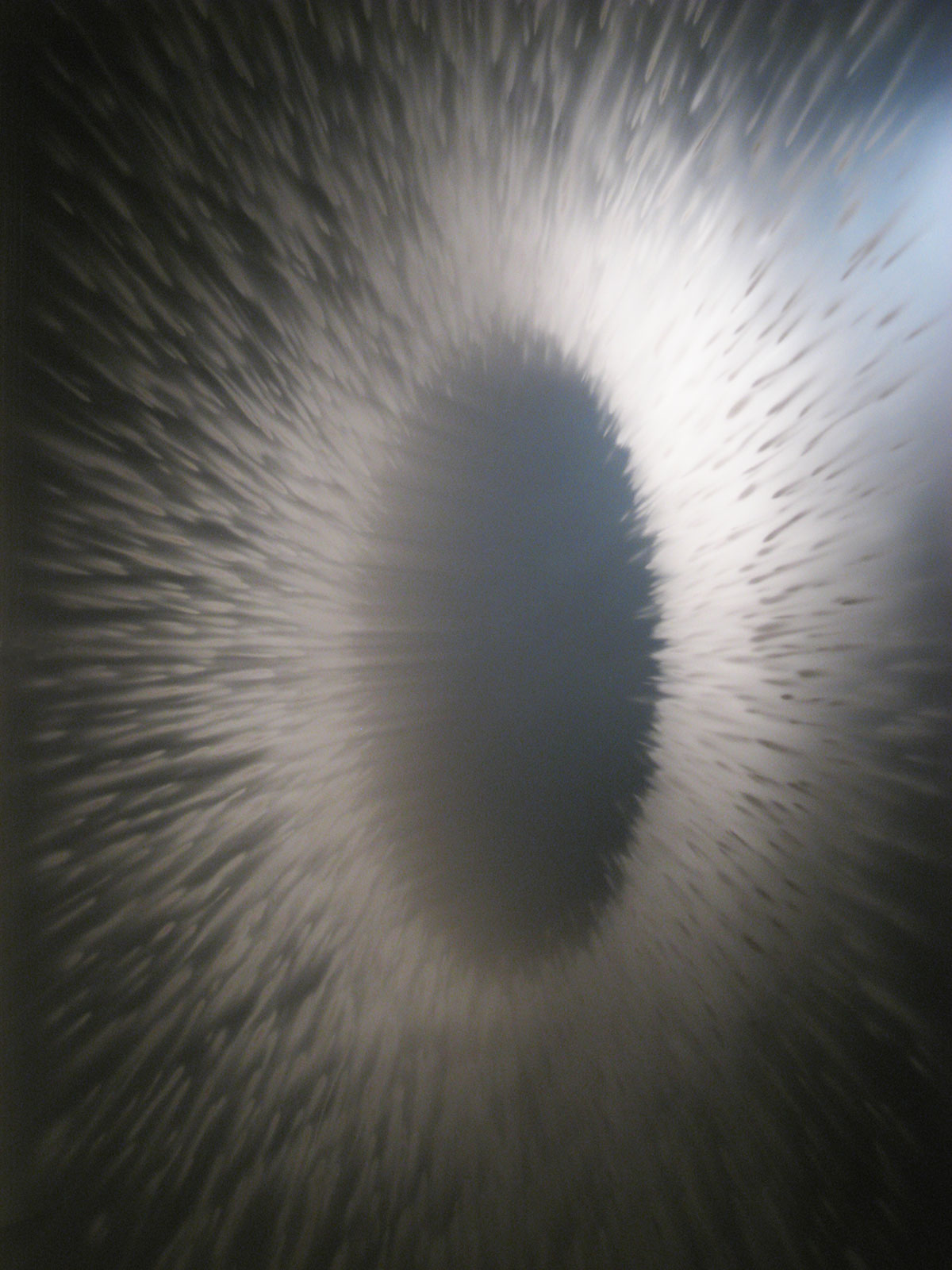
For Boccioni, force-lines emphasize the becoming-atmospheric of dynamic form. Becoming-atmospheric suggests a transduction from object to the palpable mobility of spacetimes of invention. Rather than simply creating a boxed animation, what Spriggs’ work proposes is a creative engagement with the becoming-environment of the spacetimes of experience we co-create as we move-with the sculptures’ animate form.
This is not an easy task. Following Boccioni’s lead, David Spriggs makes sculpture dynamic, creating a relational environment. What his work proposes is that we create a movement-with that can become an emergence-of animate form. This play with emergence is an inventive pact between art and participant. It proposes relation without telling us in advance how to move.
Spriggs’ work invites us to see-with what is not actually there and to move-with the constellation of what we’re beginning to see. Moving-with perception composing itself, we experience the dynamics of an object becoming spacetime. We no longer simply observe – we are moved by the experience of watching, and we move with it. We note the contours but feel the colors. We see the lines but feel the rhythm. We see-with the becoming-work. This is the activity of plastic dynamism expressing itself through the emergence of a body-image constellation.
Text by Erin Manning